
AI-ENABLED SOFTWARE ENGINEERING
Engineering Intelligence Into Your Business.
PANTROCK helps startups and enterprises turn complex business requirements into scalable software, intelligent AI solutions and modern digital platforms — from strategy and architecture to deployment and long-term growth.
Five connected stages read left to right: Business Need, Intelligence, Architecture, Software and Scale. Each stage feeds the next, so scale is the outcome of the chain rather than a separate service.
- The objective, the constraint and the cost of doing nothing.
- The data and the decisions the system has to get right.
- The design that names its trade-offs before code is written.
- Engineering in short cycles against a working system.
- Operating the result as users, load and requirements change.
THE PROBLEM
Technology Should Solve Business Problems — Not Create New Ones.
Most technology problems reaching us are not really technology problems. They are business questions that were answered in code before anyone agreed on what the answer had to achieve.
- Technology decisions without business context
- Slow MVP/product delivery
- Fragmented systems
- Legacy applications
- Difficult integrations
- Scaling challenges
- Lack of technical expertise
- AI experimentation without business value
- High development costs
- Poorly maintained codebases
PANTROCK bridges the gap between business intent and technical execution.
WHAT PANTROCK DOES
One Technology Partner. From Idea to Scale.
Six capability areas, one accountable team. An engagement starts wherever the problem is and carries through to a system in production — there is no hand-off between the people who design it and the people who build it.
Product Engineering
Design and build digital products from concept to production.ReactTypeScriptFlutterNode.jsExplore capabilityAI & Intelligent Systems
Integrate AI, LLMs, RAG and agentic workflows into real business processes.LLMsRAGAI AgentsMachine LearningExplore capabilityEnterprise Software
Build business-critical applications tailored to organizational workflows..NETPythonSQL ServerPostgreSQLExplore capabilityCloud & DevOps
Build reliable cloud infrastructure, CI/CD pipelines and scalable deployments.AWSAzureDockerKubernetesCI/CDExplore capabilityIntegrations & Digital Platforms
Connect CRMs, ERPs, payment systems, APIs, third-party services and internal systems.REST APIsGraphQLWebhooksExplore capabilityModernization & Optimization
Modernize legacy applications, improve architecture, optimize performance and prepare systems for scale.AngularMySQLMongoDBKubernetesExplore capability
ARTIFICIAL INTELLIGENCE
AI That Works With Your Business.
AI creates value when it is connected to real workflows, proprietary data and measurable business outcomes.
- AI application development
- LLM integration
- RAG systems
- AI assistants
- Agentic AI
- workflow automation
- intelligent document processing
- AI-powered search
- business intelligence
- machine learning integrations
BUSINESS TO TECHNOLOGY
We Translate Business Requirements Into Technology.
Requirements arrive in the language of the business. What gets built has to be stated in the language of engineering. The translation between the two is the work most projects skip.
INDUSTRIES
Where These Systems Run.
The constraints change with the domain; the standard does not. What follows is the system shape each of these industries tends to demand.
Banking & Financial Services
Transactional integrity, auditable history and integrations that cannot silently fail.
Insurance
Document-heavy workflows, rule engines and long-lived case records.
E-Commerce
Catalogue, checkout and fulfilment paths that hold their shape under traffic.
Energy & EV
Device telemetry, time-series data and operations that run unattended.
Community / Membership Platforms
Identity, roles and content that many people edit at once.
Business Operations
Internal tools, approvals and reporting across systems that were never designed together.
These are the industries the company's project record covers. Nothing beyond this list is claimed.
CASE STUDIES
Built for Real-World Complexity.
Each case study answers the same five questions. The three below are written at the level of the engineering: the problem, the decision taken before anything was built, and what the system does now.
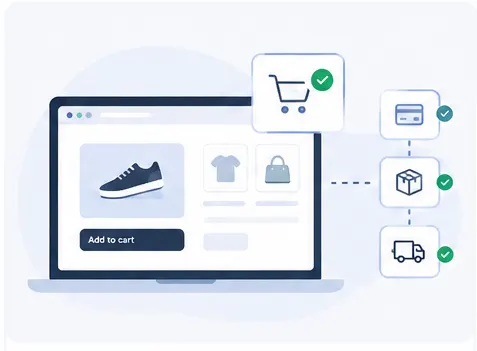
Engineering a Connected E-commerce Experience
- E-commerce
- Payments
- Fulfilment
- Take an end-to-end view of the commerce lifecycle, prioritising the customer experience alongside operational reliability. Configure the storefront, integrate the essential third-party services, and validate the critical purchase and fulfilment scenarios before launch.
- An implementation connecting the five core stages of the purchase journey — product discovery and catalogue browsing, cart and checkout, payment processing, order management, and shipping and fulfilment integration — including storefront configuration, product organisation, payment testing and shipping workflow validation.
- Shopify, payment gateway integration, shipping and fulfilment APIs, third-party integrations.
- A connected digital sales channel with an end-to-end purchase flow tested through a real payment transaction. Payment and order processing were validated separately from carrier pickup and delivery, giving the business a clearer view of operational readiness.
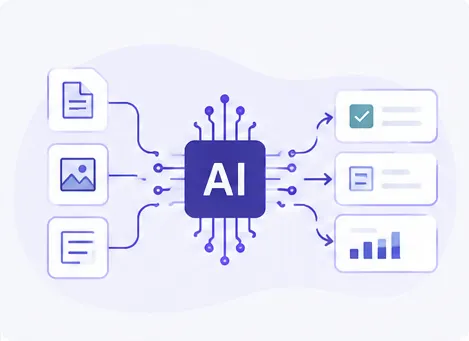
Bringing Intelligence Into Business Workflows
- AI integration
- Intelligent systems
- Automation
- Identify where AI adds practical value inside the existing process. Separate model-driven tasks from deterministic business rules, define how information enters and leaves the system, and establish the validation and exception-handling requirements before implementation.
- An integration built around three functional layers: input and context, which receives the relevant business information from the workflow; intelligence, which applies AI to supported tasks such as extraction, classification or summarisation; and workflow integration, which returns structured output to the right system or human reviewer, with validation and approval steps where automated output needs review.
- AI model integration, APIs, Node.js and Python services, existing business applications.
- AI capabilities sit inside everyday business operations, with a defined path from incoming information to usable output. The architecture gives the business a foundation for evaluating consistency, processing time and manual intervention against its own operational data.
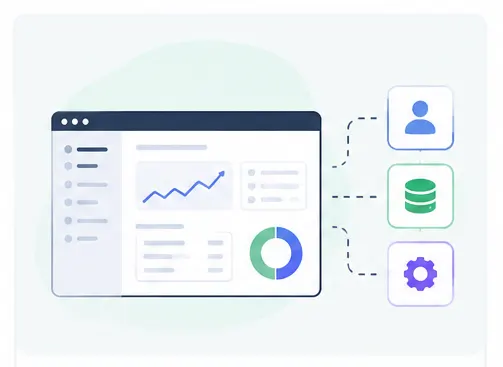
Connecting Complex Business Operations
- Custom CRM and ERP
- Energy and insurance
- Systems integration
- Analyse the business processes, the data relationships and the system dependencies before defining the solution. Prioritise reliable information exchange, clear workflow ownership and a modular architecture, so the software can follow operational requirements as they change.
- Custom business-system capabilities organised around three engineering priorities: process alignment, structuring application workflows around the business requirement; data consistency, defining how records move between components; and system integration, connecting functionality through the appropriate APIs and integration mechanisms.
- Custom software engineering, .NET, Node.js, SQL databases, REST APIs, cloud platforms.
- Software capabilities aligned with the defined business workflows, supporting more structured information handling and a maintainable foundation for later work. Claims about processing time, data accuracy or operational savings are left to the engagement's own evidence.


HOW WE WORK
From Ambiguity to Architecture. From Architecture to Impact.
Six stages, run in short cycles against something that works. Every one of them ends in an artefact you can inspect — never a document that describes one.
WHY PANTROCK
Engineering Depth. Business Understanding. One Team.
Seven things that decide how an engagement goes, and that a proposal cannot fake.
Business First
Technology decisions are aligned with business objectives.
Architecture Before Code
Strong architecture prevents expensive technical debt later.
Full-Cycle Delivery
From discovery to deployment and support.
Lean Expert Team
Senior technical thinking without unnecessary organizational layers.
AI-Native Thinking
AI is evaluated as part of the solution architecture, not added merely for marketing.
Built to Scale
Systems designed for changing users, workloads and business requirements.
Long-Term Partnership
PANTROCK remains involved beyond initial development.
ENGINEERING STACK
Technology as Proof of Engineering Capability.
Grouped by the layer it is accountable for, because that is how the decisions are actually made.
The delivery stack drawn as stacked bands from infrastructure at the base up to the interface, showing which concerns PANTROCK owns at each layer.
- React
- Angular
- Flutter
- TypeScript
- .NET
- Python
- Node.js
- LLMs
- RAG
- AI Agents
- Machine Learning
- AWS
- Azure
- Docker
- Kubernetes
- CI/CD
- MySQL
- PostgreSQL
- MongoDB
- SQL Server
- REST APIs
- GraphQL
- Webhooks
- Third-party integrations
LEADERSHIP
The People Behind the Engineering.
Four people accountable for the work, and reachable during it. Engagements are led by the engineers who designed them.
Pankaj
Senior Software Architect / Cloud & Enterprise Systems
Architects scalable, high-performance software systems with deep expertise across .NET, cloud infrastructure, backend engineering and enterprise application architecture.
Abhishek
Project Manager, PMP® / Client Solutions & Business Intelligence
Client-facing project manager focused on business intelligence, requirements, stakeholder alignment and technology delivery.
Nisarg
Tech Lead / Full Stack & AI Engineering
Builds scalable full-stack and AI-powered applications across modern cloud environments, combining backend engineering, frontend development, machine learning and cloud-native architecture.
Tirth
Project Manager / Full Stack & DevOps
Combines hands-on full-stack engineering with project leadership to drive products from requirements and development through deployment and continuous delivery.
THE FORMULA
PANTROCK Isn't Just A Name. It's A Formula.
Four letters, and the standard each one sets.
The formula rendered as connected terms, showing that business understanding combined with engineering discipline and applied intelligence is what produces a system that scales.
- PRECISIONThe requirement is understood before the first line is written.
- ARCHITECTUREThe design is decided deliberately, with its trade-offs on the record.
- NOVELTYNew technology is adopted where it changes an outcome, not to be current.
- TECHNOLOGYEngineering depth across the stack, applied to the business problem.
R.O.C.K.
- ReliabilityThe system behaves the same way on the day nobody is watching.
- OwnershipThe problem stays ours until it is solved in production.
- CollaborationYour team is in the room for the decisions, not just the demos.
- KnowledgeWhat we learn is written down and handed over.
ENGAGEMENT MODELS
Three Ways to Work With Us.
The shape of the engagement follows the problem. These are the three that cover almost every conversation that starts here.
Build a Product
- For startups and businesses building a new product.
- Discovery, architecture and full-cycle engineering through to launch and the increment after it.
- A discovery phase, then delivery in short cycles against a working system.
Extend Your Team
- For companies that need additional engineering capability.
- Senior engineers inside your process, accountable for outcomes rather than for hours.
- An embedded team working to your cadence, with our architecture review behind it.
Transform Existing Systems
- For businesses modernizing, integrating or scaling existing technology.
- Assessment, modernization and integration of the systems already carrying the business.
- An architecture assessment, then incremental delivery with the platform staying live.
QUESTIONS
The Questions Businesses Ask First.
Six answers that are usually needed before a first conversation is worth booking.
Yes. PANTROCK works as an engineering partner alongside an internal team — architecture review, additional delivery capability, or ownership of a defined part of the system — rather than as a replacement for it.
Yes. Modernization, optimization, integrations and feature development on an application that is already in production are all in scope.
No. PANTROCK works across new product development, modernization of existing systems and ongoing engineering on platforms already running.
Yes. The common case is intelligence added to a workflow and a data set the business already owns, inside the systems it already runs — not a separate AI product beside them.
Yes. Discovery, requirements analysis, feasibility assessment, architecture and technical planning are engagements in their own right, and often the most useful place to start.
Yes. Support, optimization and continued engineering after launch are part of how PANTROCK engages, not a separate contract nobody mentioned.